Xeroplast Solutions LLP is the exclusive marketing agent in India for DelipacTM (UK) — a patented, ISO-certified paperboard engineered for the QSR sector. Hot & cold single-use cups, without the plastic problem.
what touches your drink matters
Xeroplast Solutions LLP partners with India's QSR brands, beverage chains, packaging converters, and food service operators to replace plastic-lined paper cups with a sustainable, future-fit alternative.
Sole marketing agent for DelipacTM (UK) across India — one trusted point of contact for the entire value chain.
Samples, technical specifications, certification documentation, and supply coordination — handled in country.
Designed for the realities of high-volume cup conversion — heat tolerance, leak resistance, print quality, and line speed.
Aligned with India's plastic-reduction direction and globally recognised EU plastic-free, compostable, and recyclable standards.
Especially engineered for food & drink packaging. A carbon-balanced product endorsed by independent ISO-certified credentials. Serving the world differently — which sets us apart.
No PE, no PLA, no bio-plastic lining, no microplastic shedding. Just specially engineered paperboard.
Engineered to perform across QSR beverage applications — from coffee to chilled drinks.
Naturally returns to the environment. Compatible with standard paper recycling streams (98%+ fibre recovery).
Manufactured to a carbon-balanced standard with verified World Land Trust credentials.
A unique, IP-protected formulation developed by DelipacTM in the UK.
Built for the realities of high-volume single-use foodservice and modern cup-forming lines.
Almost every paper cup in circulation carries a thin plastic lining. That lining is what decides where the cup ends up — and in practice it rules out the two good outcomes. It can't go through standard paper recycling, because the plastic film contaminates the fibre stream. And it won't realistically compost either: PE linings aren't biodegradable at all, while PLA "bioplastic" linings only break down in industrial composters running at 58°C and above. That leaves one default destination: landfill.
In India this is not a theoretical risk — it is the norm. There is effectively no recycling stream for plastic-lined cups, and certified industrial composting for packaging is scarce and poorly integrated with waste collection. Only around a third of India's urban solid waste is scientifically processed; the rest goes to landfill, to unmanaged dumpsites, or into the open environment. With the QSR and beverage sectors expanding by the billion, the overwhelming majority of single-use cups are never recycled and never composted — they end up buried, where the plastic lining persists for centuries. A cup marketed as "paper" becomes, in effect, buried plastic.
The same lining that ruins the cup's end-of-life also ends up in the drink. Conventional plastic and PLA (bioplastic) linings shed thousands of microplastic and nanoplastic particles into every hot beverage served. In one Indian study (IIT Kharagpur), a single hot cup released roughly 25,000 microscopic plastic particles into the liquid within 15 minutes — and PLA cups have been measured shedding several times more than PE. These particles have since been detected in human blood, lungs, the gut, the placenta and even breast milk. Emerging research has associated microplastic exposure with inflammation and, in early studies, with cardiovascular and hormonal effects — though a direct causal link in humans is still being established. PLA, often marketed as "compostable," still fragments into the same microplastics inside a hot cup and is no safer to ingest.
DelipacTM removes that lining entirely — no plastic, no PLA, no microplastic shedding — without compromising on heat tolerance, leak resistance, print quality, or production speed on existing cup-forming lines.
Talk to our teamMost "paper" cups still depend on a plastic lining — either conventional polyethylene (PE) or so-called bioplastic (PLA). Both shed microplastics, both compromise recycling and compostability. DelipacTM removes the lining entirely.
| Feature | PE-Coated Paper | PLA-Coated Paper | DelipacTM |
|---|---|---|---|
| Plastic Lining | ✗ Polyethylene film, typically ~15–30 µm | ✗ PLA bioplastic film | ✓ None — engineered paperboard only |
| Microplastic Shedding | ✗ Tens of thousands of particles per hot drink1 | ✗ Fragments into microplastics under heat1 | ✓ 0% — no coating to shed |
| PFAS-Free Verified | ⚠ Rarely independently verified2 | ⚠ Rarely independently verified2 | ✓ FIDRA + US TPCH 62-element |
| Home Compostable | ✗ Polyethylene is non-biodegradable | ✗ Fails home test — requires industrial heat3 | ✓ TÜV OK Home / NF T51-800 |
| Industrial Compostable | ✗ Polyethylene is non-biodegradable | ✓ EN 13432 (≥58°C, 12-week cycle)3 | ✓ EN 13432 + DIN CERTCO |
| Paper Recycling Stream | ⚠ Specialised cup streams only; very low in mixed paper4 | ⚠ Contaminates standard streams | ✓ 98%+ fibre recovery (Cyclos-HTP) |
| Landfill / Mixed Waste | ✗ Polymer fragments persist for centuries | ⚠ Persists without industrial composting | ✓ Biodegrades in 2–6 months · no residue |
| Hot & Cold Use | ✓ Yes — but sheds plastic when hot | ⚠ Standard PLA softens above ~60°C5 | ✓ Same grade for hot & cold |
| Food-Contact Compliance | ✓ FDA / EU | ✓ FDA / EU | ✓ FDA + EU + EN 1935/2004 |
| EU PPWR / SUP Ready | ✗ Falls under EU SUP Directive (2019/904) | ✗ Treated as plastic under EU SUP6 | ✓ Aligned with PPWR 2025/40 & SUP 2019/904 |
| Forest Certification | ⚠ Varies by supplier | ⚠ Varies by supplier | ✓ PEFC Chain-of-Custody certified |
| Carbon Balanced | ✗ Not typically offset | ⚠ Bio-based feedstock; offsets not standard | ✓ World Land Trust verified |
DelipacTM claims drawn from credentials documented elsewhere on this page (Flustix FPPC029, FIDRA, DIN CERTCO, Cyclos-HTP, PEFC Chain-of-Custody, ISEGA, World Land Trust). Comparison rows for PE- and PLA-coated cups describe the product category in general and may vary by manufacturer.
The DelipacTM family covers the full breadth of food-and-drink packaging — from hot QSR cups to ovenable trays, chilled food packs, and clear barrier board.
Single & double-side coated paperboard engineered for hot & cold beverage cups. Available in matt and silk finishes.
Gloss-finish grease, moisture & liquid barrier board for convenience food, bakery, ice cream and dairy packaging.
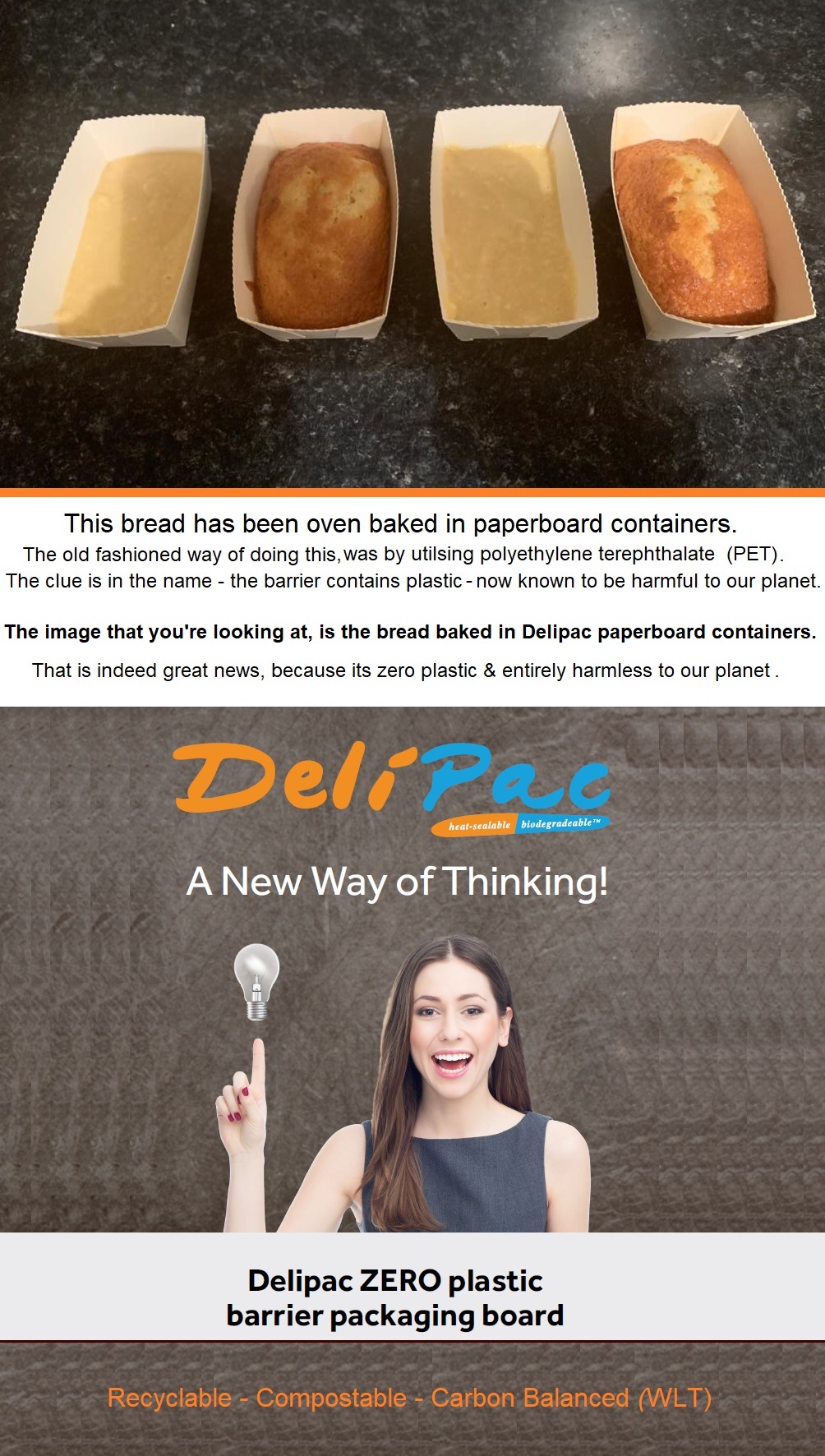
Freezer-to-oven ready paperboard. Suitable for chiller, microwave and conventional oven use without plastic lining.
Clear & hybrid high-barrier coated board for premium packaging where visibility and barrier performance both matter.
Independently recognised by FIDRA (UK) as free of fluorocarbons (PFOA, PFOH, PFAS). EN 15968 & US TPCH 62-element compliant.
Remarkable print capabilities — supports premium QSR branding, taint & odour compliant (EN 1230-1), food-safe inks.
Wherever single-use paper packaging is used today, DelipacTM fits in — without compromise on performance.
DelipacTM is backed by recognised international standards for plastic-free composition, biodegradability, and carbon balance. Full certification documents and technical specification sheets are available on request.


DelipacTM is independently recognised as PFAS-free — verified through FIDRA, US TPCH 62-element analysis, REACH/SVHC compliance and EU regulatory comparison. Download the full evidence pack below.
Aerobic qualitative disintegration timeframe of DelipacTM paperboard under ambient-temperature composting conditions, in accordance with DIN CERTCO home composting (EU certification requirement: 26-week duration). DelipacTM fully disintegrates in just 22 weeks.
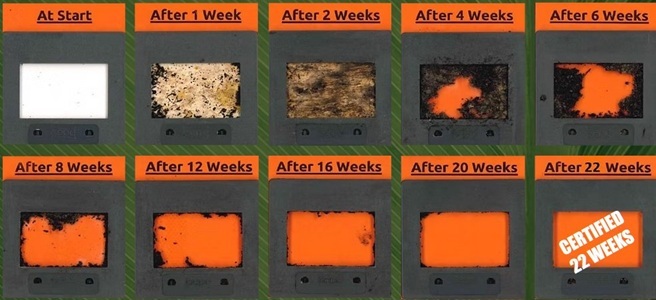
DelipacTM paperboard biodegrading under home-composting conditions.
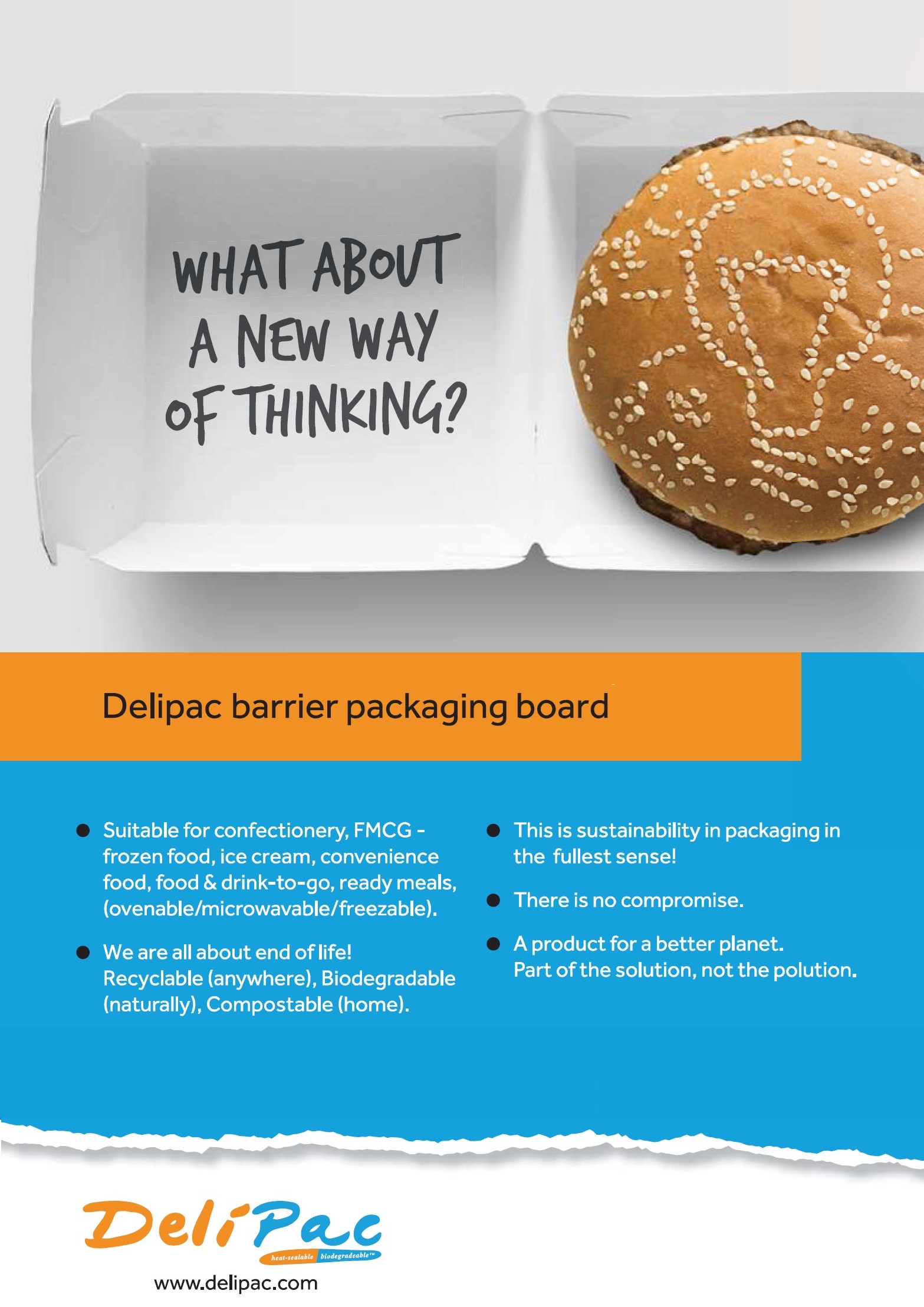
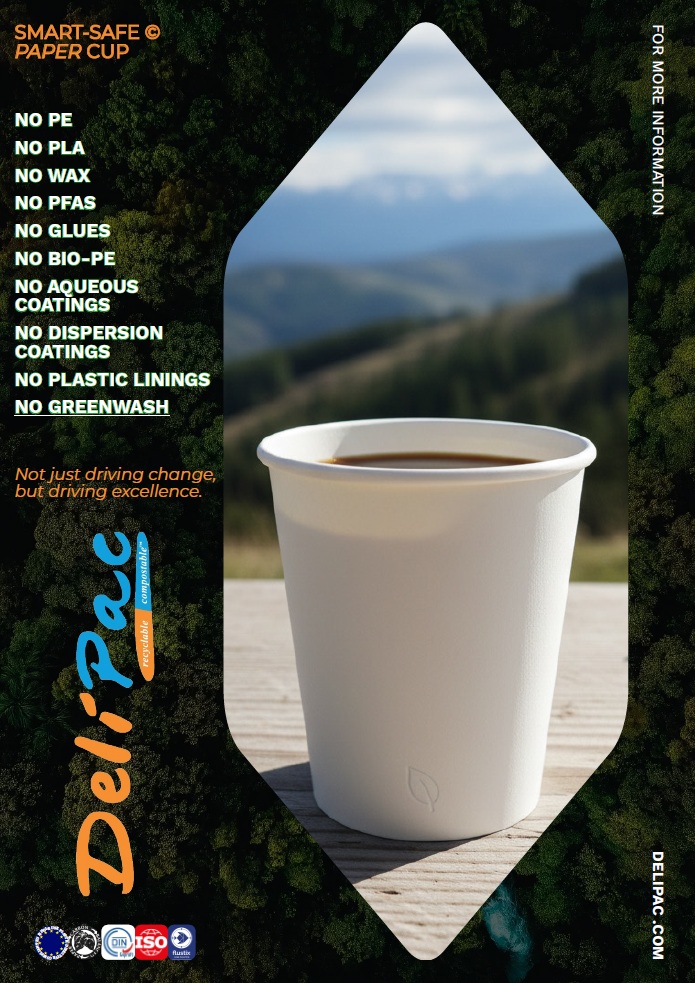
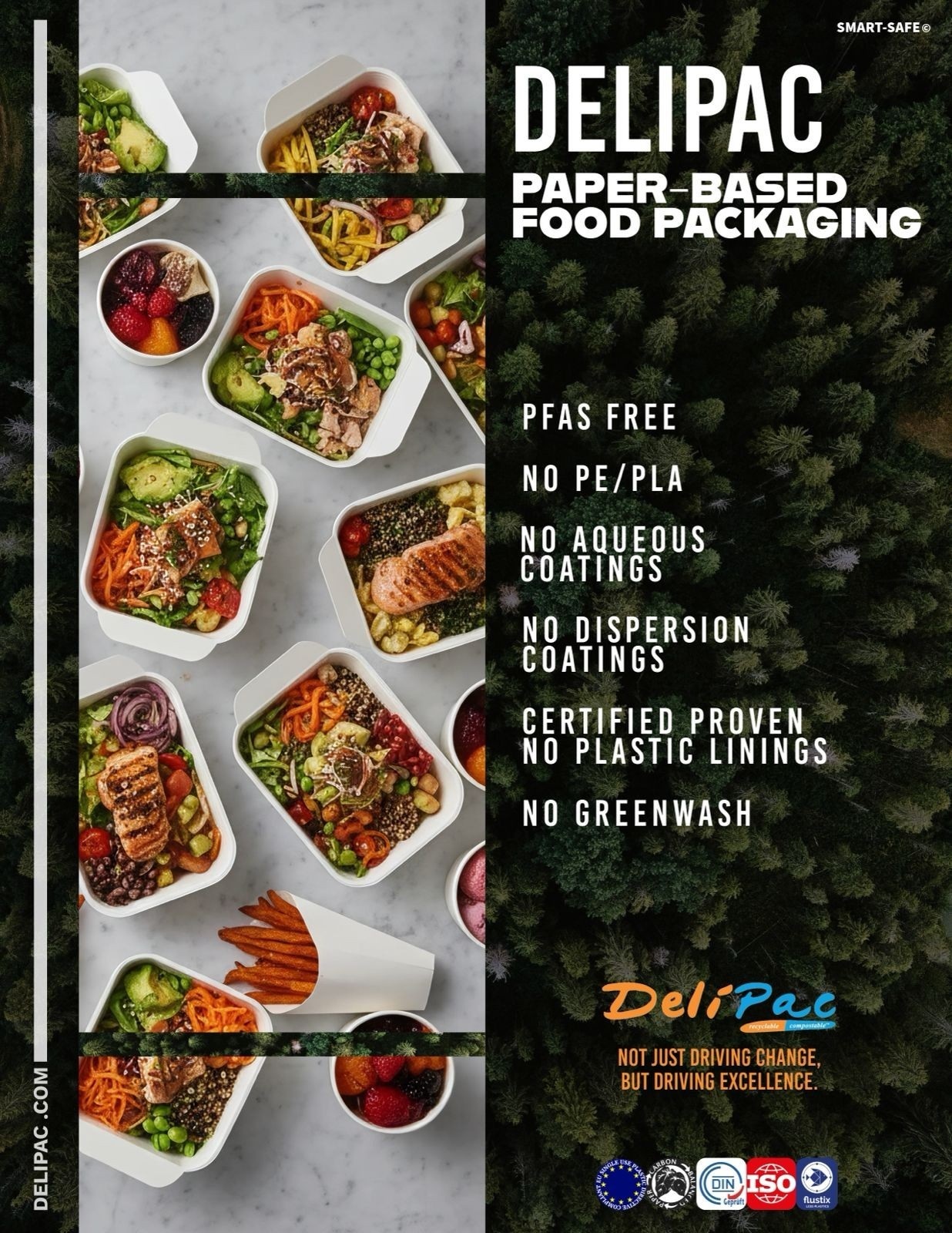
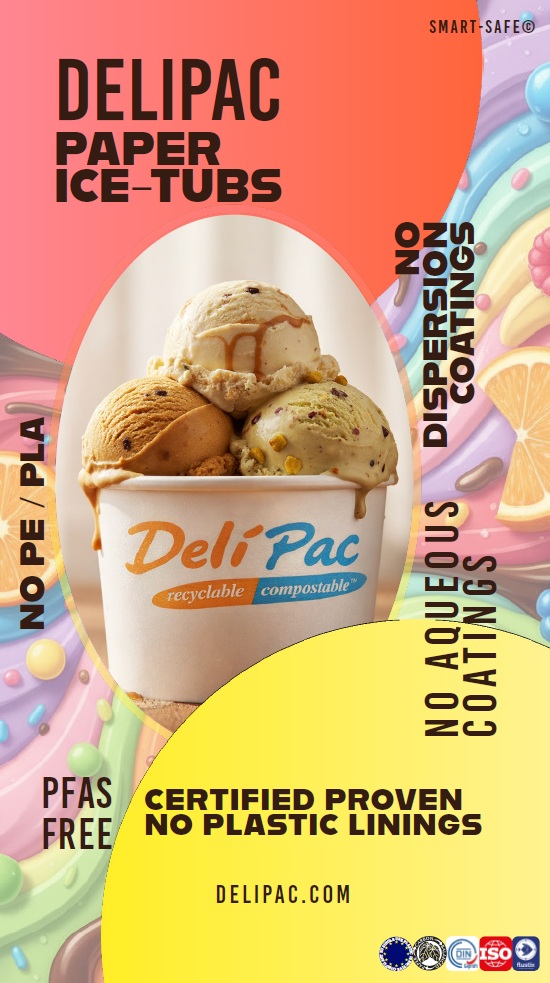
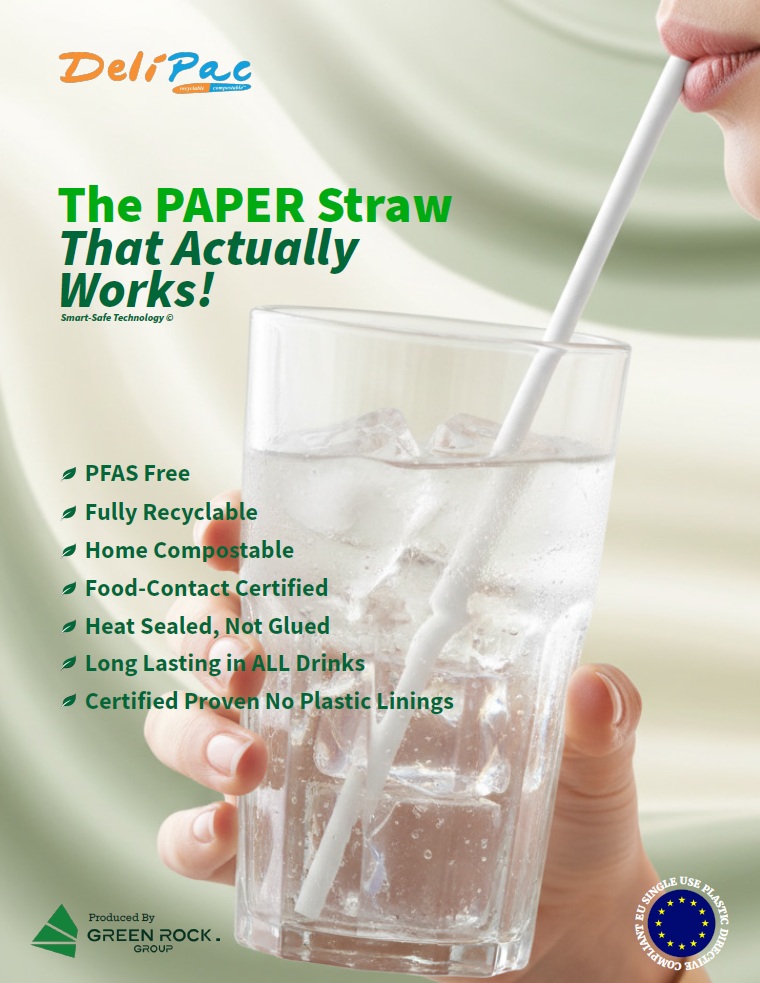
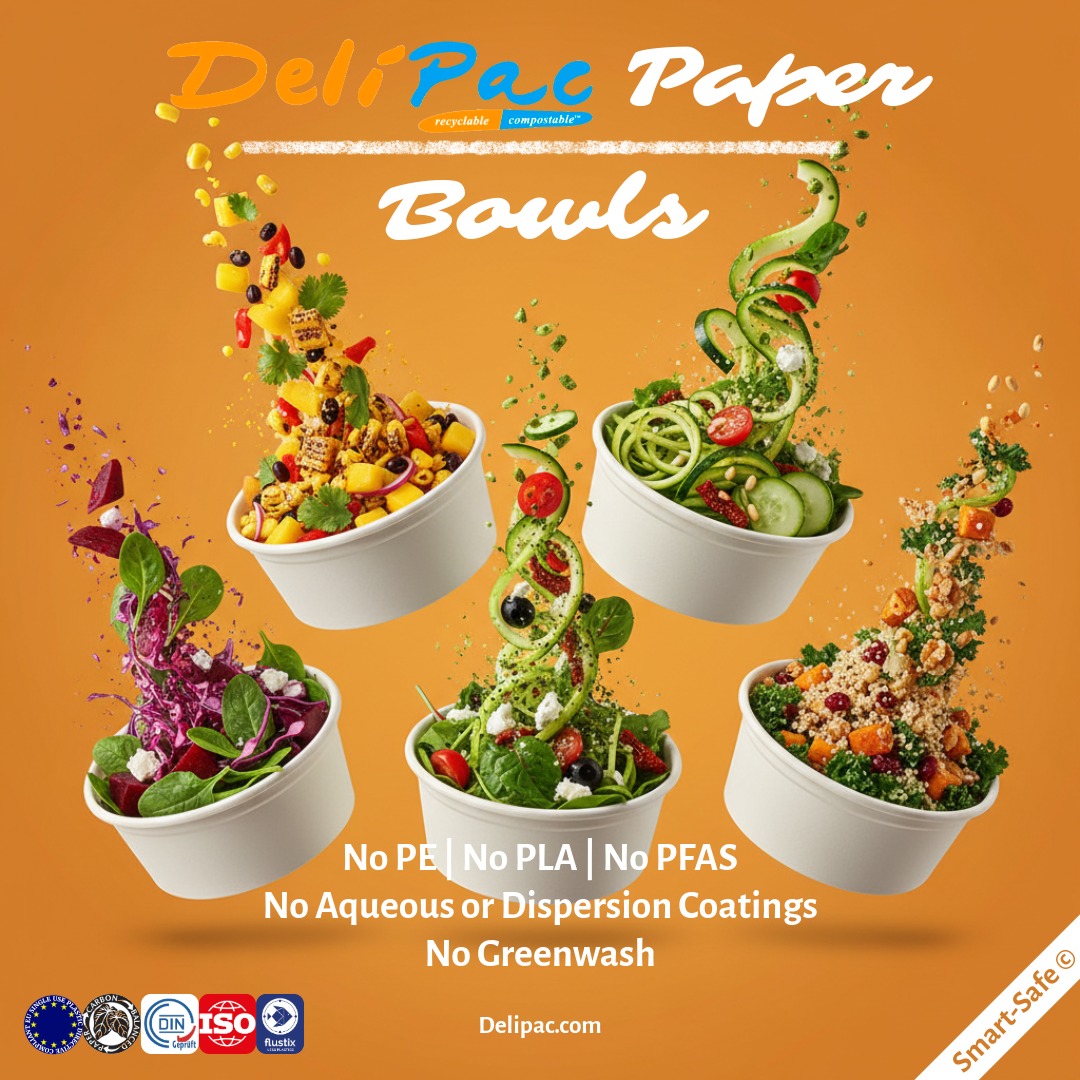
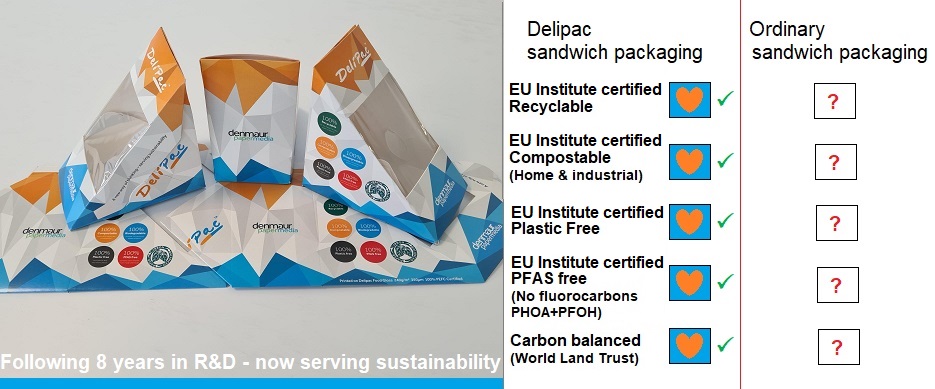
Print and trade-press creative from the DelipacTM visual library. Click any advert to view it full-size.
Whether you operate a QSR chain, a packaging conversion line, or a foodservice brand looking for a credible plastic-free option — we'll help you evaluate DelipacTM for your application.